Direct answer
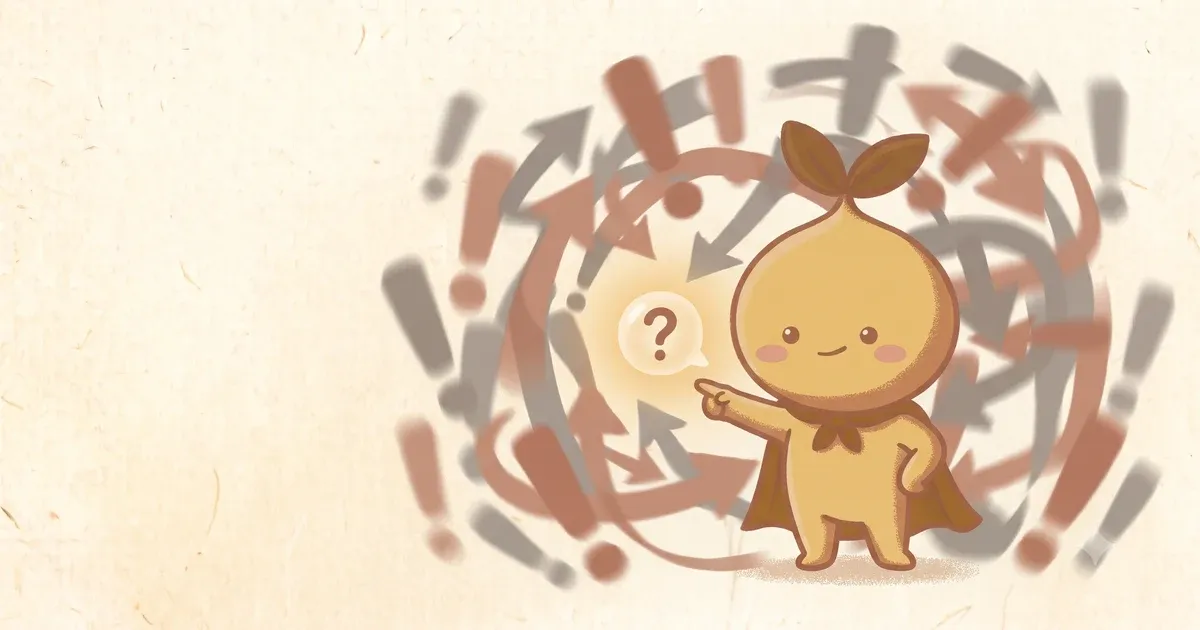
Before reacting, take ten seconds to say or write one sentence: the actual question right now is ___. Most pressure fog does not come from the situation itself, it comes from reacting to the feeling of urgency sitting on top of it.
A tense email from your manager, a deadline that just moved up by a day, a disagreement getting loud in a meeting: all of these can produce the same racing, unfocused feeling before you have even worked out what you are actually deciding. Naming the real question, in one specific sentence, forces you to separate that feeling from the decision underneath it.
It is not the same move as 'take a deep breath' or 'stay calm', which ask you to manage the feeling directly. This asks you to find the smaller, answerable thing hiding inside the big vague one, then deal with that.
Most of the fog clears once the question is that specific, and naming it takes about as long as reading this paragraph.
Original Nuglet framework
The Name the Question Pause
This takes about ten seconds and is built for small, daily pressure: a hard email, a meeting that turns tense, a decision that suddenly feels urgent. It is not designed for genuine emergencies, where trained protocols matter more than a pause.
- 1
Notice the physical signal that pressure has hit: a tight chest, a racing pulse, thoughts jumping to worst-case outcomes, or the urge to act immediately. Noticing is the trigger for the whole pause, so pick one or two of your own signals in advance and treat them as your cue.
- 2
Before doing anything else, say or write one sentence: 'The actual question right now is ___.' Say it out loud if you can, since speaking forces more precision than just thinking it. In a meeting or on a call, writing it down works just as well and nobody has to notice.
- 3
Check the sentence against the size of the feeling. If it still sounds as big and vague as the panic itself, for example 'everything is falling apart', narrow it again: what, specifically, needs an answer in the next few minutes, not the next few weeks?
- 4
Answer only that one sentence. Ignore every other worry attached to it, even the real ones. Those can wait for a moment when you are not also trying to think clearly under pressure.
- 5
Act on that answer, then let the rest of the noise wait until you have the bandwidth to deal with it deliberately, instead of while it is dressed up as an emergency.
Practical experiment
Try it on your next small pressure moment
Use this on something small first, so the habit is already built before you need it for something that matters. Trying a brand-new pause technique for the first time during a genuinely stressful moment is much harder than practicing it on a minor one.
- Pick a moment today that feels rushed or tense, even a minor one: an inbox getting full, a message that reads more harshly than it probably means to, a meeting invite dropped on your calendar with no warning.
- Pause for ten seconds and write the one sentence question you are actually answering right now, not the several related questions your brain wants to hand you at once.
- Notice whether the question you wrote is smaller and more specific than the feeling was a moment ago. If it still feels huge, narrow it one more time before answering.
- Decide based on that one sentence, then move on. Do not use the pause to solve every adjacent worry, that is a different task for a different moment.
- At the end of the day, glance back at the moments where you used it. Notice whether the fog cleared faster than it usually does. That feedback is what turns this into a habit instead of a one-off trick.
Worked example
Worked example: naming the question in a heated meeting
Here is what this looks like in a real moment, not a hypothetical one.
- Step 1: Mara is running a product review when a stakeholder interrupts, visibly annoyed, and says the timeline the team committed to last week is now unacceptable and needs to move up by two weeks. The room goes quiet. Mara's chest tightens, and her first instinct is either to agree on the spot to defuse the tension, or push back hard to protect the team.
- Step 2: Instead of answering immediately, she takes the ten-second pause. In her head, she names the real question: 'The actual question right now is: what can I commit to in this meeting without checking with the team first?' Not 'is the stakeholder right', not 'will this damage the relationship', not 'what does this say about how the project is going', just that one narrower question.
- Step 3: Once she has named it, the answer is easy: she cannot move the whole timeline up in the room, because she has not checked feasibility with the two engineers whose work is most affected. So she says exactly that: she will get a real answer within 24 hours instead of a guess right now.
- Step 4: The stakeholder, who was mostly reacting to feeling unheard, calms down once he has a concrete next step and a deadline for it. Mara leaves the meeting having made zero commitments she could not keep, instead of the rushed compromise she almost offered under pressure.
- Step 5: The other questions, the ones about the relationship and the project's overall health, do not disappear. Mara deals with them later that day, with more information and without the racing feeling steering the answer.
What this will not do
This is not a substitute for trained protocols in situations where the stakes are genuinely high and timing matters, like medical emergencies, safety incidents, or anything with irreversible consequences in the next few seconds. Those situations need drilled procedures, not a ten-second thinking exercise, and treating them the same way would be dangerous advice dressed up as calm advice. This pause is scoped to the daily friction that actually eats most people's clear thinking: deadlines, hard conversations, a tense meeting, a decision that feels urgent in the moment but is not life or death. If you are not sure which category a situation falls into, that uncertainty is itself a sign it is probably the daily-friction kind, since genuine emergencies rarely leave room for that question.
What if naming the question does not make you feel calmer
Sometimes you will name the question correctly and still feel just as wound up as before. That is normal, and it does not mean the pause failed. The point of this technique is not to make the anxious feeling disappear, it is to stop that feeling from making the decision for you. You can be nervous and still answer a narrow, specific question well; those are two different things happening at once. If the physical activation is strong enough that you genuinely cannot think, a few slow breaths or a short walk before you attempt to name the question can help, then come back to the sentence once your body has settled slightly. But do not wait for calm before naming the question. Most of the time, naming it is what starts the calming, not the other way around.
Nuglet
Make better calls when pressure hits
Take the quiz in 60 seconds and get daily lessons on noticing what you're feeling before you react. Built for moments with high pressure.
Sources
Nuglet frames the Name-the-Question Pause as its own short protocol for separating the feeling of urgency from the specific decision underneath it, not as a clinical or academic intervention.
Nuglet lessons include three text lengths, brief audio, discussion audio, one infographic, and a quiz.
In an fMRI study, labeling an emotional facial expression with a word reduced amygdala activity and increased right ventrolateral prefrontal cortex activity compared to matching the same expression without labeling it, suggesting that putting a feeling into words helps regulate the brain's response to it.
Putting Feelings Into Words: Affect Labeling Disrupts Amygdala Activity in Response to Affective Stimuli • checked 2026-07-08
Related Nuglets
Keep the thread going
The definition behind why one small, daily practice builds a real skill over time.
A related daily practice for testing how well you actually understand something.
A quick gut check protocol for sorting small decisions from the ones that deserve real time.
Find the first small lesson that fits your current goal.