Direct answer
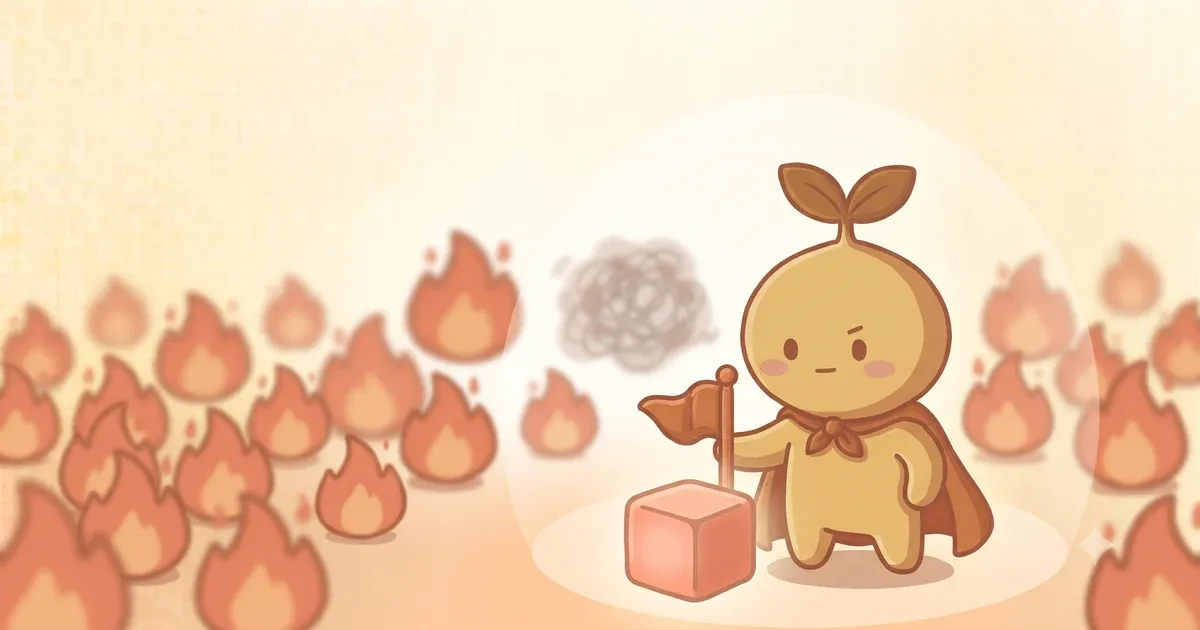
When everything feels urgent, stop trying to rank the whole list. Pick the one task you would protect if you only had one block of time today, and give it that block before anything else gets a turn.
Practical experiment
Name the One Thing
This is not a full prioritization system. It is a way to act in the next hour when the list feels like everything is on fire.
- Look at the list and ask: if I could only finish one thing today, which one would actually matter tomorrow?
- Say that task out loud or write it at the top of a blank page, by itself.
- Block the next 25 to 50 minutes for only that task. Let everything else wait, even if it feels urgent.
- When the block ends, repeat the question. The list rarely needs a perfect ranking, just a next one thing.
What this will not fix
This will not reduce your actual workload, and it will not work if your job genuinely has more true emergencies in a day than blocks of time to handle them. It is a way to act under normal overwhelm, not a fix for a structurally overloaded role.
Nuglet
Practice naming one thing, daily
Take the 60-second quiz and get a daily Nuglet lesson built around one idea you can actually finish.
Sources
Repeated behavior in stable contexts can become cue-responsive over time, which is why naming a single clear task gives you something to act on that a vague sense of urgency does not.
How are habits formed: Modelling habit formation in the real world • checked 2026-06-21
Nuglet lessons include three text lengths, brief audio, discussion audio, one infographic, and a quiz.
Related Nuglets
Keep the thread going
The definition behind why one focused idea works better than a long list.
A related approach for protecting one task instead of splitting attention across several.
A related fix for the moment you're stuck choosing instead of acting.
Find the first small lesson that fits your current goal.