Preview
A small useful taste
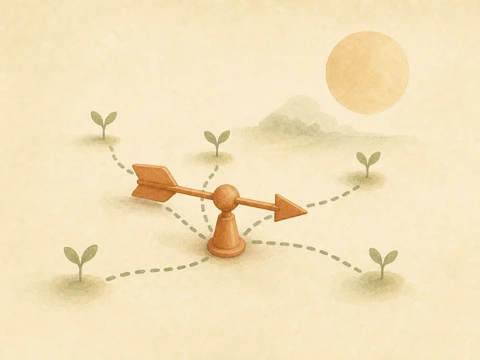
Intelligence is very good at one specific thing: constructing a defense for a conclusion you already reached. That is exactly what makes smart people vulnerable to a particular kind of bad decision, not despite their reasoning ability but because of it. Judgment is shaped by incentives, emotions, identity, and the story that feels easiest to justify afterward, and a sharper mind is simply better equipped to build a convincing case for whichever answer it already favored. This is sometimes called motivated reasoning: using intelligence to rationalize rather than to investigate. Raw intelligence can improve a decision, but only when it is paired with something that pushes back, friction from other people, honest feedback loops, and enough humility to treat your first instinct as a hypothesis rather than a conclusion.
Try this now
Say the idea back in one sentence. If you cannot explain it yet, open the full Nuglet and take the guided step.
Discovery links
Where this Nuglet gets its weight
Backed by sources, not shaped by feeds.
This Nuglet distills ideas from trusted source types, then turns them into one short lesson you can actually use.
Behavioral science
How attention, memory, and judgment shape everyday choices.
Decision research
What helps people compare options, notice tradeoffs, and avoid weak evidence.
Expert explainers
Clear framing from people who spend time with the problem.
What you will understand
One idea, ready to use
The point
You can spot one common trap that makes smart reasoning turn into self-justification.
The pace
A 5-minute Nuglet that stays focused on one useful takeaway.
The next step
Start the real Nuglet for practice, progress, and a path to what to learn next.
Nuglet next step
Start this Nuglet
Start the full Nuglet to practice the idea, mark it complete, and keep your next lesson moving.
Nuglet native
This page is a preview wrapper around a real Nuglet ID: cmqsnednu000210fyxsua6hy9.
Related Nuglets
Keep the thread going
Short next lessons that stay connected to this idea.

Confident answers
A short Nuglet on why confidence can feel like truth before accuracy catches up.

Why procrastination happens
A short Nuglet on why procrastination is often emotion management, not laziness.
AI is prediction
A short Nuglet on treating fluent AI answers as predictions to verify, not magic truth.