Preview
A small useful taste
A confident answer can feel reliable mainly because certainty is easy to read, a firm tone, no hedging, a clean and simple explanation, and your brain treats that ease of reading as a shortcut for accuracy, because most of the time in everyday life the two do line up closely enough. That feeling is genuinely useful when it is calibrated, it lets you move fast without re-deriving everything from scratch. It becomes a liability the moment confidence and accuracy come apart, because a wrong answer delivered with total certainty reads exactly the same as a right one, and there is no built-in alarm that tells the difference. Slowing down before accepting a confident claim, and asking what evidence backs it rather than how sure it sounds, is what lets you separate the two before you act on the wrong one.
Try this now
Say the idea back in one sentence. If you cannot explain it yet, open the full Nuglet and take the guided step.
Discovery links
Where this Nuglet gets its weight
Backed by sources, not shaped by feeds.
This Nuglet distills ideas from trusted source types, then turns them into one short lesson you can actually use.
Behavioral science
How attention, memory, and judgment shape everyday choices.
Decision research
What helps people compare options, notice tradeoffs, and avoid weak evidence.
Expert explainers
Clear framing from people who spend time with the problem.
What you will understand
One idea, ready to use
The point
You can notice when confidence is shaping your trust before the evidence does.
The pace
A 5-minute Nuglet that stays focused on one useful takeaway.
The next step
Start the real Nuglet for practice, progress, and a path to what to learn next.
Nuglet next step
Start this Nuglet
Start the full Nuglet to practice the idea, mark it complete, and keep your next lesson moving.
Nuglet native
This page is a preview wrapper around a real Nuglet ID: cmqnqb8u00001zuvsasq15kz8.
Related Nuglets
Keep the thread going
Short next lessons that stay connected to this idea.
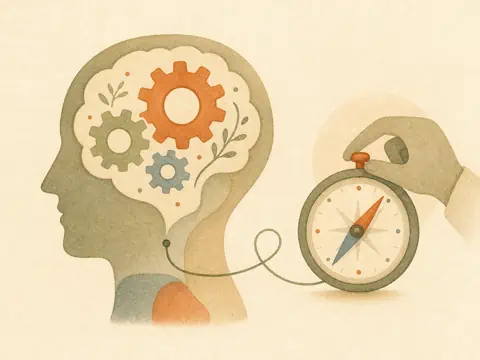
Smart bad decisions
A short Nuglet on why intelligence does not automatically protect people from bad judgment.

AI is prediction
A short Nuglet on treating fluent AI answers as predictions to verify, not magic truth.

Confidence is not accuracy
A short Nuglet on separating a confident feeling from a checked answer.